 How-to
Selling Inherited Property From Out of State: A Step-by-Step Guide
Quick Summary
Selling inherited property from out of state starts with confirming your legal authority, since a title company will require proof before closing. Gather certified documents such as Letters Testamentary or Letters of Administration, and check whether ancillary probate applies in the property's state. Then build a local team to handle the vacant home and the remote sale.
- Confirm whether ancillary probate is required in the state where the property is located.
- Keep certified copies of Letters Testamentary or Letters of Administration for the title company.
- Get a written agreement among heirs covering decisions, expenses, and buyouts before listing.
- Compare contractor repair estimates against likely price gains before choosing an as-is sale.
- Verify every wire instruction by phone with a known number to avoid remote-sale fraud.
Table of Contents
- Confirm Your Legal Authority Before You List
- Gather the Documents Needed to Sell Inherited Property
- Selling Inherited Property With Siblings or Other Heirs
- Hire Local Help and Prepare the Vacant Home Remotely
- Understanding Taxes on Selling Inherited Property and Your Next Step
- Frequently Asked Questions
Confirm Your Legal Authority Before You List
Selling inherited property from out of state starts with one question: do you have the legal right to sell it? Check your authority first, because a buyer's title company will.
Probate and Ancillary Probate Requirements
Probate is the court process that transfers a deceased person's assets to their heirs. Where the home sits in a different state than the person who died, you may need a second court process called ancillary probate.
- Primary probate: Opened in the state where the deceased person lived.
- Ancillary probate: Opened in the state where the out-of-state property is located.
- Timing: Probate length varies widely by state and by how complicated the estate is.
A probate attorney in the property's state can confirm whether ancillary probate applies.
Letters Testamentary and Letters of Administration
Once a court accepts the estate, it issues documents that prove who can act for it. Letters Testamentary are issued when a will names an executor. Letters of Administration are issued when there is no will, and the court appoints an administrator (Probate | Superior Court of California).
These documents are your proof of authority. Keep certified copies on hand, because a title company will ask for them before closing.
Gather the Documents Needed to Sell Inherited Property
Having the right paperwork ready keeps the sale moving. Missing documents are one of the most common reasons remote sales stall.
- Death certificate (certified copies)
- Letters Testamentary or Letters of Administration
- The original deed or recorded title showing the decedent as owner
Ask your title company for a full list of requirements early. Each state and county can have its own rules, so confirm the details for the property's location.
The table below lists the core documents to have ready before you list, so the sale does not stall.
| Document | Purpose | Note |
|---|---|---|
| Death certificate | Proves the owner has died | Use certified copies |
| Letters Testamentary or Letters of Administration | Proves who can act for the estate | Title company requires them |
| Original deed or recorded title | Shows the decedent as owner | Needed to clear title |
| Property tax records and current tax bill | Confirms taxes owed | Current bill required |
| Homeowners insurance information | Confirms coverage on the property | Keep policy details current |
| Mortgage or lien statements | Shows any debt on the property | Only if applicable |
| Utility and HOA contacts | Lets the buyer confirm services and dues | Only if applicable |
Selling Inherited Property With Siblings or Other Heirs
When several people inherit a home, every heir usually has to agree before a sale can proceed. Disagreements are the most common source of delay.
Start with a written agreement covering who makes decisions, how costs are shared, and what happens if someone wants out.
Consider these points before you list:
- Agree on price range: Get a market analysis so everyone works from the same numbers.
- Split expenses clearly: Track repairs, taxes, insurance, and utilities.
- Set a decision method: Majority vote, or a named co-executor, can prevent deadlock.
Put all agreements in writing. Verbal promises made at a family meeting rarely hold up once money is involved. See how past sellers in similar out-of-state situations fared.
Hire Local Help and Prepare the Vacant Home Remotely
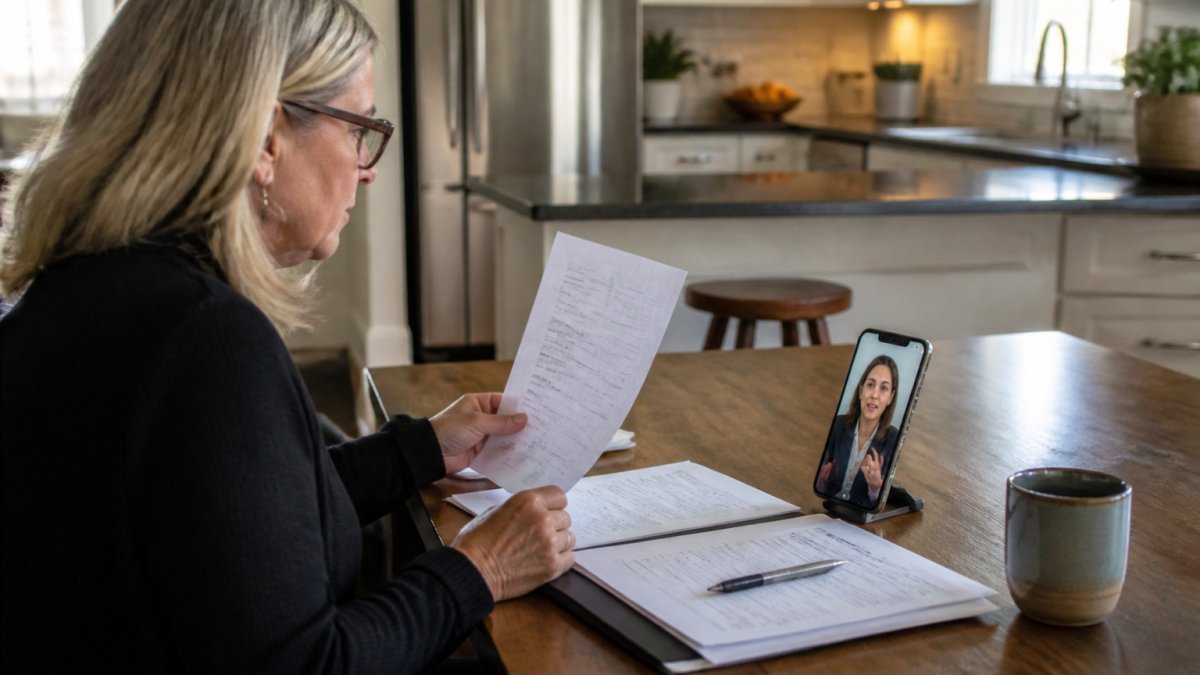
Living far away makes this sale harder, but a trusted local team can handle most of the work. Find a team that can list and market a vacant home for you without being on site. The key is to run the sale on a dated sequence so probate, property preparation, listing, and closing do not collide.
A Practical Remote-Sale Timeline and Task Checklist
No two estates move at the same speed, but most remote sales follow a similar order of operations. Treat the weeks below as a planning framework, not a guarantee, probate courts and title companies set their own pace.
- Weeks 1-2: Confirm authority and open the file. Order certified death certificates, confirm whether ancillary probate is required in the property's state, and ask the title company for its full document checklist. Nothing else should be listed until authority is clear.
- Weeks 2-4: Secure the vacant home. Switch or confirm utilities, verify the homeowners insurance still covers a vacant property, arrange lawn and mail handling, and place a lockbox only with the agent's approval.
- Weeks 3-6: Build the local team. Interview at least two local agents, confirm the attorney's license with the state bar, and get a written title quote.
Dependencies matter: do not order repairs before authority is confirmed, and do not schedule closing before the title company has cleared the deed.
Choosing an As-Is Sale or Making Repairs
An as-is sale means you sell the home in its current condition, with no repairs made. This saves time and money, but buyers may offer less. Making repairs can raise the sale price, but only if the repairs cost less than the value they add. Review the range of preparation services available to handle the home before sale. Get two or three contractor estimates before you decide.
Remote Maintenance, Cleaning and Fraud Safeguards
A vacant home can deteriorate quickly. Water leaks, pests, and break-ins are common problems, and an empty house signals to thieves that no one is watching.
- Schedule regular inspections: Have a local person check the home every few weeks and send dated photos.
- Keep utilities on: Heat and water help prevent freeze damage and mold; shut off water at the main only after winterization.
- Winterize where needed: In cold climates, drain pipes and arrange a professional winterization before the first freeze.
Never wire funds based on an email alone. Confirm every change in instructions by phone.
Understanding Taxes on Selling Inherited Property and Your Next Step
Inherited property often receives a "stepped-up basis," which resets the property's tax value to its fair market value on the date of death (Gifts & inheritances). This can reduce the capital gains tax you owe when you sell. State taxes and transfer taxes vary, so confirm the details with a tax professional.
A Remote-Sale Cost Worksheet
Before you accept an offer, build a simple worksheet so every heir can see the likely net proceeds. The categories below are the ones most remote sellers need to plan for; fill in actual quotes as they arrive.
- Probate and legal fees: Attorney fees, court filing costs, and any ancillary probate expenses in the property's state.
- Property carrying costs: Property taxes, homeowners insurance (vacant-home policies often cost more), utilities, lawn care, and HOA dues until closing.
- Repairs and preparation: Contractor estimates, cleaning, junk removal, and staging if you choose it.
Subtract the total from the expected sale price to estimate net proceeds. Update the worksheet as quotes come in, and share it with the other heirs so no one is surprised at closing.
Tax Scenarios Beyond a Quick Sale
A quick sale is not the only path, and each choice can change the tax picture:
- Sell soon after death: The stepped-up basis is freshest, and there is little gain if the sale price is close to the date-of-death value.
- Hold the property: Future appreciation above the stepped-up basis may be taxable when you eventually sell, and you take on carrying costs in the meantime.
- Rent it out: Rental income is generally taxable, and you may need to allocate expenses and depreciation; the rules are more complex than a simple sale.
State rules on inheritance, transfer, and property taxes vary widely, so confirm the details with a tax professional licensed in the property's state.
Your next step is to confirm your legal authority, gather your documents, and build a local team. Read guidance on avoiding regret when committing to a deal before you sign. Once those pieces are in place, you can decide between an as-is sale and repairs with confidence. To discuss your situation, use the GET IN TOUCH option on our website.
Frequently Asked Questions
Can I sell an inherited house if I live in another state?
Yes. You can sell an inherited house from another state as long as you have legal authority over the property. That usually means being named executor or administrator, or holding title as an heir after probate. Because real estate is governed by the state where the property sits, you will typically need a local real estate agent, a title company, and sometimes an attorney licensed in that state. Some closings are handled remotely with mobile notaries and e-signature where the state permits it.
How long does probate take for a house?
Probate for a house commonly takes several months to over a year, depending on the estate's size, whether there is a will, whether heirs disagree, and the local court's caseload. If the decedent lived in a different state, ancillary probate in the property's state can add time. Filing paperwork promptly and gathering the death certificate and asset list early helps keep the process moving.
Do I need to travel to sell inherited property?
Not always. Many sellers complete the process without returning to the property by hiring a local agent to manage showings and repairs, using a trusted local contact for access, and signing documents through a mobile notary or remote online notarization where the state allows it. You may still need to visit once for a walkthrough or final inspection, depending on the property and the buyer's requirements.
What taxes might apply when selling inherited property?
Tax treatment of inherited property depends on the circumstances of the estate and the sale. Consult a tax professional about any state income tax, transfer taxes, and the estate's own tax obligations that may apply. Keep records of the valuation, closing costs, and estate expenses, and consult a tax professional for your specific situation.